
AI search tools like Perplexity, ChatGPT Search, and Google’s AI Overviews pull from public posts on X, Instagram, TikTok, LinkedIn, and Reddit to answer questions that need fresh, real-time information. They weigh recency, engagement, and credibility the way a reporter weighs a source, and platforms like Instagram and Facebook are now cited by some AI tools more often than long-trusted review sites.
Picture this: your favourite club is playing, but you’re stuck away from a screen. You can’t wait for the highlights, so you frantically hop between X, Snapchat, TikTok, and Instagram to catch the real-time commentary. You’re looking for what fans are saying right now.
That’s a good starting point for understanding how AI search engines use social media today. Tools like Perplexity, ChatGPT Search, and Google’s AI Overviews treat platforms like X, Instagram, TikTok, and LinkedIn as their eyes and ears on the ground. By scanning these public feeds for the latest updates, engagement, and expert takes, they piece together answers that a static webpage simply can’t match on speed.
Social media has turned into one of these tools’ go-to sources for fresh information, and there’s real data behind that shift, not just a vibe.
The Data Behind How AI Search Engines Use Social Media
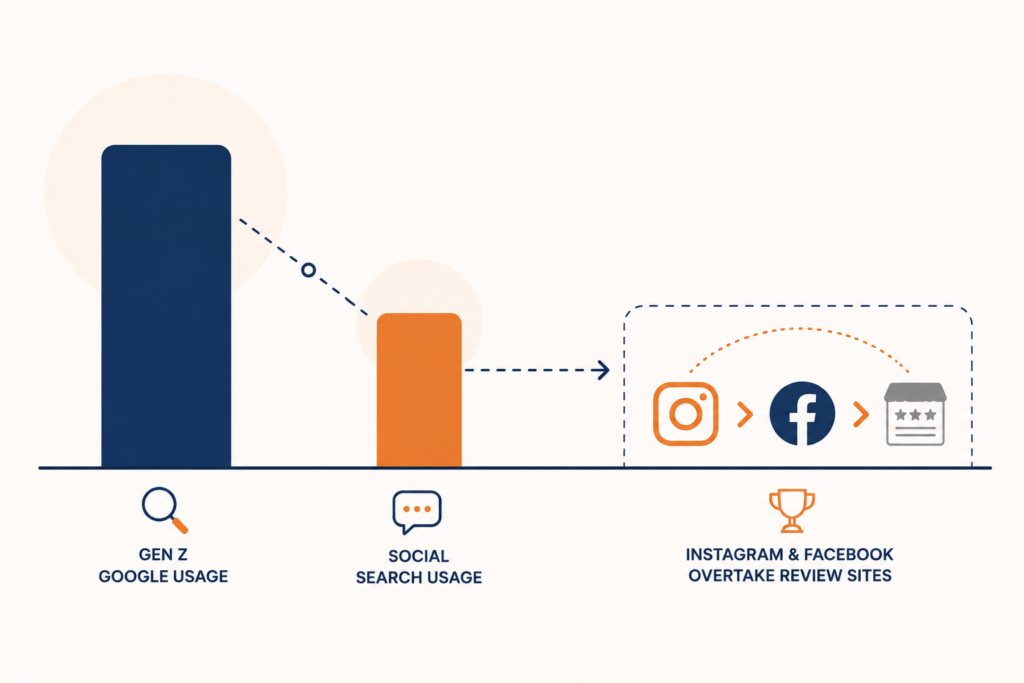
A few numbers make the shift from theory to something worth planning around.
Gen Z now uses Google roughly 25% less than Gen X does, running the same question across TikTok, Reddit, and Instagram instead, often to get a more human-feeling answer than a list of blue links. AI search tools have followed that behavior. Research based on Semrush data found that Facebook and Instagram posts are now more likely to be cited by ChatGPT than Quora, Walmart, Home Depot, or Target, sites people have relied on for reviews and product research for years. Separate analysis of AI-generated answers has found that YouTube is the most cited domain across the major AI search tools, ahead of most traditional websites.
None of that means static content and official sources stopped mattering. It means social platforms earned a permanent seat at the table alongside them, which is exactly what the reporter analogy is trying to capture.
Think of AI as a Busy World Cup Reporter
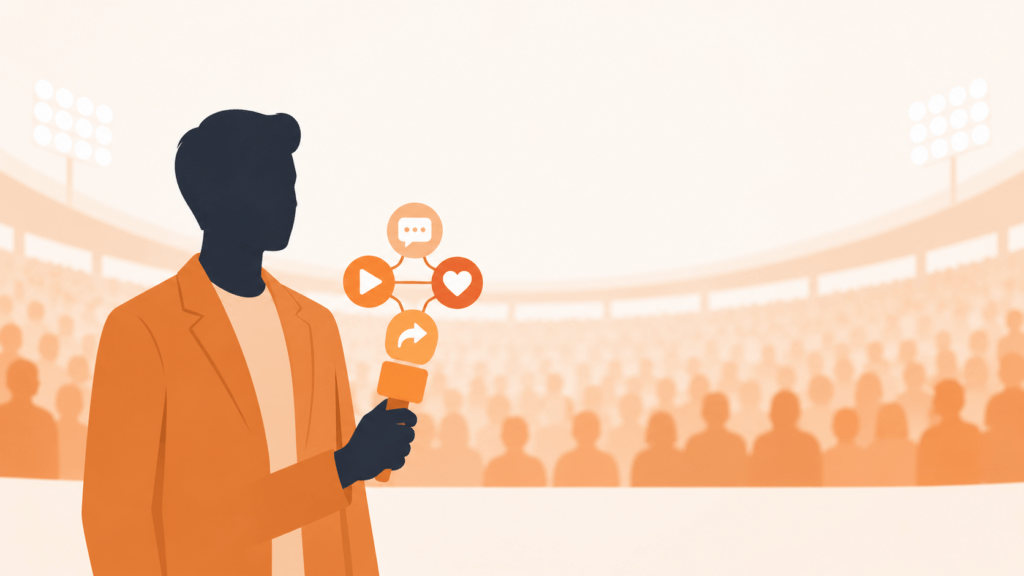
Tools like Perplexity, ChatGPT Search, or Google’s AI Overviews are like that sharp reporter who’s always on the ground at the tournament.
Where does this reporter hang out? The crowded spots: stadiums packed with fans, lively fan zones in different US cities, and the big online gathering places like X (Twitter), LinkedIn, Instagram, TikTok, and Snapchat. That’s where supporters, experts, and regular folks are chatting openly in real time.
Important note: just like any decent reporter, the AI can’t peek into your private group chats or closed messages. It only looks at what’s out there in public.
What is the reporter actually paying attention to?
| What the Reporter Listens For | AI Equivalent | World Cup Example |
|---|---|---|
| Breaking news | What’s happening right now | “Star player picked up an injury in training,” posted minutes ago |
| Public opinion | What people are saying | Fans going wild or moaning about a dodgy referee call |
| Credible voices | Experts and trusted accounts | A football analyst dropping real insights on X or LinkedIn |
How the AI Reporter Puts the Story Together
It works in a way that’s pretty human when you think about it:
- Collects takes from hundreds or even thousands of posts across different platforms.
- Sorts the similar ideas and themes.
- Summarizes the main point in plain language, something like “Fans everywhere are buzzing about the USA team’s latest performance.”
- Pulls in quotes from relevant voices: “According to recent chatter on X…” or “Experts on LinkedIn are saying…”
The AI isn’t just copying and pasting random posts. It spots patterns, checks what’s relevant and believable, and gives you a clear, up-to-date answer with sources. That’s why it often feels more alive and current than regular search results.
Not Every Platform Gets Weighed the Same Way
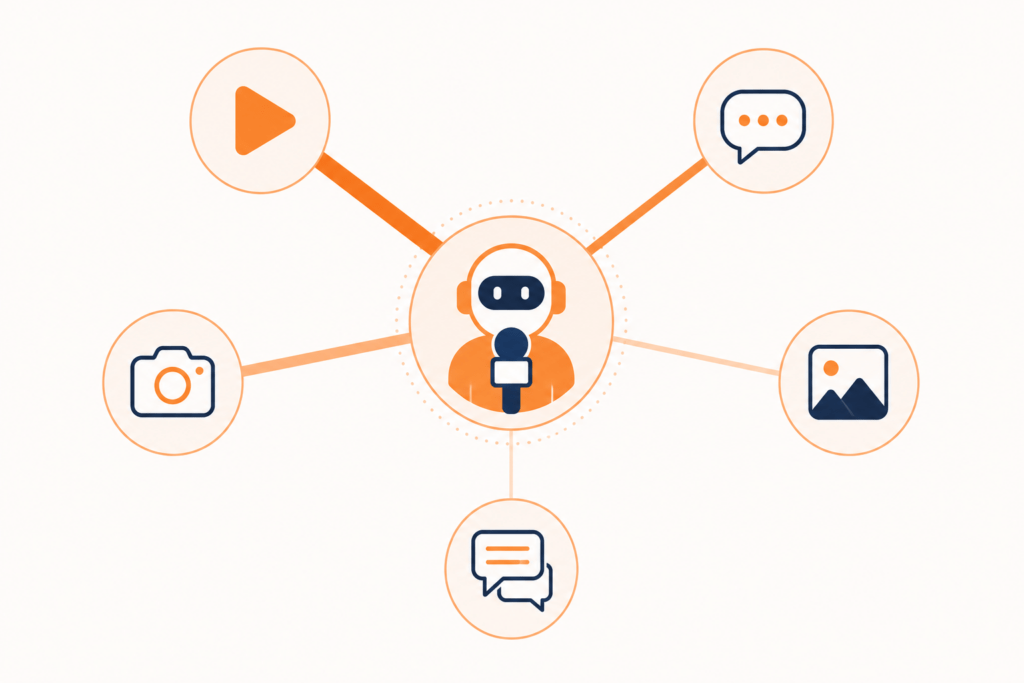
The reporter doesn’t treat every gathering spot identically, and this is where a lot of brands and creators guess wrong. Different platforms tend to feed different parts of an AI answer:
- LinkedIn rarely gets individual posts cited directly, since most platforms can’t index them the same way, but linked articles and expert commentary carry real weight for authority and analysis.
- YouTube shows up constantly as a source, especially for anything visual or instructional, and AI tools will often point users to specific timestamps.
- TikTok is cited less directly right now, but it functions as its own search engine for a huge share of younger users, which shapes what eventually surfaces elsewhere.
- Instagram and Facebook have grown quickly as sources for authentic, first-person reviews and experiences, especially since public posts started getting indexed by mainstream search engines.
- Reddit feeds a large share of AI training and citation activity, largely because threaded discussion reads as unfiltered public opinion.
The lesson isn’t “be everywhere.” It’s knowing which platform actually earns the kind of attention your content needs, then building for that one properly instead of spreading thin.
A Simple Match Analogy
To keep it really straightforward: websites and official blogs are like the proper rule book, or the detailed match report after the game. Solid, fact-filled, and trustworthy for the big picture.
Social media is like being in the stands or on your couch with everyone else, shouting your immediate thoughts: “What a goal!” or “That was a terrible call by the ref!”
AI search engines pull from both. The official stuff gives the facts, while social media adds the live energy, real feelings, and stuff that official reports might miss in the moment.
Why Social Media Matters So Much to AI
More and more of us are turning to AI for quick, real answers. Static websites are still great for deeper dives, but social media shines when you need:
- Freshness. Updates from the last few hours; think surprise match results, injury news, or fans celebrating in the streets.
- Real voices. Actual fans from all over sharing how they feel.
- Different takes. Everything from the casual watcher to the serious analysts.
AI is built to hunt for useful, current, and reliable info. Public posts on social media deliver exactly that, especially when they come from accounts people trust and engage with.
How Is This Different From Regular SEO?
Traditional search optimization is mostly about earning a ranking position on a results page. This is closer to earning a mention inside an answer that’s already being written for someone. The content still needs the fundamentals: clear structure, a real point of view, and information that’s actually accurate, but recency and public engagement carry more weight here than they do for a standard webpage. A three-year-old blog post can still rank well in traditional search. A three-year-old post is far less likely to get pulled into an answer about something happening this week.
Who Tends to Get Quoted by AI?
The reporter (AI) usually picks up on posts from folks who:
- Share things early and keep at it (that recency thing).
- Get good engagement: likes, comments, shares, saves.
- Show real knowledge, whether verified experts or accounts known for solid info.
A one-off rant might get picked up if lots of people agree, but thoughtful posts from credible people have a much better shot at being referenced.
Practical Tips for Getting Your Content Noticed
If you want a better chance of showing up in AI answers:
- Post publicly and regularly in places where people are already talking.
- Bring real value: share interesting insights or timely observations about the matches or football in general.
- Keep the language natural so it answers the questions people are actually asking, the same way you’d approach content built for different formats.
- Interact with others: reply to comments and build up your reputation over time.
- Mix it up across platforms: LinkedIn for deeper analysis, Instagram/TikTok for visuals and fun, X for instant reactions.
- Where it makes sense, pair a public post with a downloadable resource or a deeper article, so people who want more than a quick take have somewhere to go.
Common Mistakes That Keep Content Out of AI Answers
A few habits quietly work against everything above:
- Posting once and moving on. A single strong post rarely gets picked up on its own. The accounts that show up repeatedly in AI answers post consistently, not occasionally.
- Writing like an ad. AI tools lean toward posts that read like a real person talking, not branded copy. Overly polished, sales-heavy language tends to get skipped in favor of something that sounds lived-in.
- Ignoring replies and comments. Engagement is one of the clearest signals a reporter (human or AI) uses to judge whether a post is worth citing. A post with zero interaction reads as unproven, even if the information is solid.
- Treating every platform the same. A caption written for LinkedIn rarely works pasted directly into TikTok, and vice versa. Reshape the message for where it’s actually landing, similar to how a content marketing tool helps adapt one idea across formats without losing the point.
- Assuming private content counts. Group chats, closed communities, and private accounts stay invisible to AI search, no matter how much genuine expertise lives there. If it matters, it needs a public home somewhere.
The Bigger Picture
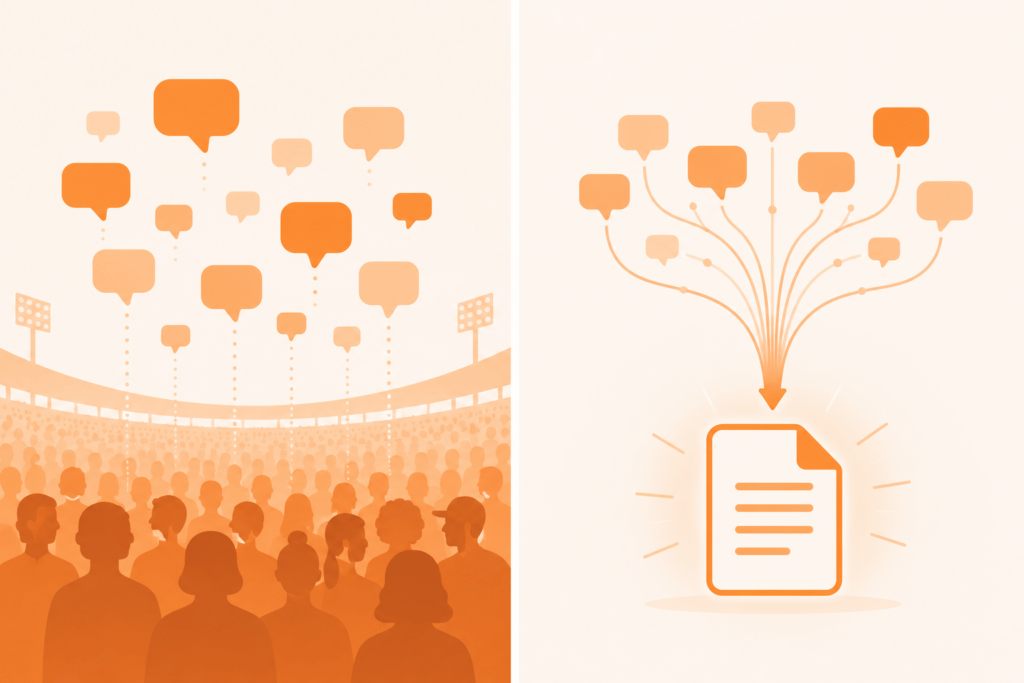
The World Cup moves fast and throws up surprises every day. Whether you’re a die-hard fan, someone who analyzes the game, or just likes sharing your two cents, knowing how AI finds content can help you stay in the mix. The same real-world examples that show up in AI-generated answers today started as ordinary public posts from people who showed up consistently.
Social media isn’t only about keeping up with mates anymore. It’s turned into this huge public forum where AI reporters are listening in to shape what millions of people see. Jump in thoughtfully, and you’re adding to the conversation while getting your own voice out there.
Bottom line: official websites are like the steady rule book or post-match reports. Social media is the loud, excited buzz in the stadium and online. AI listens to both, but when it needs to know what’s happening right now during something as lively as the World Cup, it heads straight to the public chatter.
Ready to make your voice heard? Start putting out helpful, genuine stuff on public platforms. The AI reporters, and your audience, are definitely paying attention.
FAQ
Does AI search actually use social media?
Yes. AI search tools like Perplexity, ChatGPT Search, and Google’s AI Overviews pull from public posts on platforms like X, LinkedIn, Instagram, and TikTok, especially for anything time-sensitive that a static webpage wouldn’t capture fast enough.
How do I get quoted by AI search engines?
Post publicly and consistently, share real insight rather than generic takes, and engage with replies. Posts with strong engagement from credible accounts have the best shot at being surfaced.
Does it matter which platform I post on?
Yes, a bit. LinkedIn tends to carry more weight for analysis and expert takes, X is where the AI reporter looks for instant reactions, YouTube gets cited constantly for anything visual, and Instagram/TikTok cover the visual, in-the-moment side of things.
Can AI see private posts or group chats?
No. It only pulls from what’s public, the same way a reporter can only report on what’s said out in the open.
Is social media replacing websites and blogs for AI search?
No, it’s supplementing them. Official sites and articles still supply the structured facts and depth AI tools rely on. Social platforms add the freshness and real-world reaction that a static page can’t update fast enough to capture, and well-optimized written content remains what most AI answers lean on for the actual substance.
Does posting more often actually help, or is it about one great post?
Consistency matters more than any single post. AI tools weigh recency and a track record of credible activity, so accounts that show up regularly tend to get cited more often than ones with a single viral moment, however good it was.