
What Is a Content Management System? How a CMS Can Help Your Business in 2026
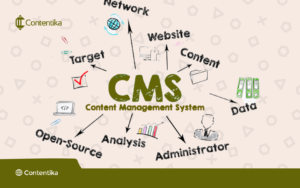
A content management system (CMS) is a software application that allows users to create, manage, store, publish, and edit digital content on a website without needing to write code. Content in this context includes text, images, videos, and other digital assets, as well as the structure that organizes them, such as web pages, menus, and blog posts. A CMS separates the content of your website from its underlying code, which means anyone on your team can update your site without involving a developer for every change As businesses continue moving online, the ability to create and maintain a website efficiently has become a baseline requirement rather than a competitive advantage. A CMS is what makes that possible for most businesses. According to W3Techs, as of 2026 over 70% of all websites use a content management system, up from just 38% a decade ago. If you’re still building and updating pages manually, you are spending more time and money than you need to. In this guide, we’ll cover what a CMS is, how it works, the best options available in 2026, and how to choose the right one for your specific needs. The History of CMS: How It All Started The concept of a content management system can be traced all the way back to the first website ever created, built by Tim Berners-Lee in 1990. That original site was built on an internet-based hypertext system that used HTML to represent text and links, and it required direct code editing to update. From there, the idea of making website management easier for non-technical users evolved quickly. By the mid-1990s, companies were building systems to help their teams manage web content without touching the underlying code. The term “content management system” entered mainstream business vocabulary, and the CMS industry was born. The 2000s brought the biggest shift: the rise of open-source CMS options. WordPress, Joomla!, and Drupal became widely adopted because they were free to use, endlessly customizable, and backed by large developer communities. Anyone could download them, modify them, and build almost anything on top of them. Today, the CMS landscape has expanded far beyond open-source platforms. Cloud-based, SaaS, headless, and enterprise-level systems have all emerged to serve different needs, and the market continues to grow. The global CMS market was valued at $28.15 billion in 2023 and is projected to reach $54.16 billion by 2032, according to Zion Market Research, growing at a compound annual rate of 7.54%. What Is a Content Management System? A content management system is software that gives you a user-friendly interface for building and managing a website without writing code for every change you want to make. Instead of editing raw HTML files, you log into a dashboard, create or edit content using visual editors, and publish it directly to your site. According to estimates, more than 80 million live websites now use a content management system, representing roughly 68.7% of all active websites. That number reflects just how fundamental CMS technology has become to how the internet works. There are two core components inside every CMS: Content Management Interface (CMI): This is the front-facing part of the system, the dashboard and editor you interact with when creating or updating content. It removes the need to see or touch the underlying code, letting you focus entirely on what you want to say rather than how to render it. Content Delivery Application (CDA): This is the backend component that stores, organizes, and serves your content to web browsers and other devices. It contains the database where all your website content lives and the logic that retrieves and displays it correctly when someone visits your site. Beyond these two core components, most modern CMS platforms also include version control (so you can see and restore previous versions of content), multi-user support with distinct roles and permissions, workflow and approval tools for teams, SEO settings, and plugin or extension systems for adding new functionality. How Does a CMS Help Your Business? 1. It Saves You Time and Money Creating and maintaining a website can be costly and time-consuming without the right tools. A CMS removes the dependency on developers for routine content updates. You don’t need to hire someone every time you want to add a blog post, update a product description, or change your homepage copy. That adds up to significant cost savings over time, particularly for small and mid-sized businesses managing their websites with limited technical staff. 2. It Helps You Reach More Visitors A CMS makes it dramatically easier to create new pages, publish blog posts, add visuals, and keep your site fresh and active. All of that matters for SEO and content marketing, since search engines favor websites that publish consistently and update their content regularly. A CMS also makes it easy to share content directly to social media, which extends your reach further without adding manual steps to your workflow. 3. It Makes Content Creation and Updates Effortless If you’ve ever had to wait days for a developer to make a simple text change to your website, you already understand the value of a CMS. With one in place, any team member with the right permissions can create, edit, and publish content directly, without touching code. Most modern CMS platforms include WYSIWYG editors that show you exactly what your content will look like before it goes live. 4. It Helps You Manage Your Business More Effectively A CMS centralizes all your website content in one place, making it easier to find, update, and track. Most platforms also provide analytics tools or integrate with platforms like Google Analytics so you can monitor visitor behavior, measure which content is performing, and make better decisions about where to invest your content efforts. That data connects directly to your broader B2B content marketing strategy or small business marketing approach. 5. It Scales as Your Business Grows One of the most important qualities of a good CMS is that it grows with you. You don’t need to