

A search intent mismatch happens when your content’s format, depth, or angle doesn’t match what a searcher actually wants, even if the keyword is right. The fix is to analyze what’s already ranking for a query, identify the intent behind it (informational, navigational, commercial, or transactional), and rebuild the content to match that intent in structure and depth, not just in wording.
You’ve done the keyword research. You’ve written a solid, well structured piece. It’s technically sound. And it still won’t rank past page two.
That’s a bigger problem than it sounds like. Backlinko’s research on Google user behavior found that only an estimated 0.44% of Google searchers ever click through to page two, so a mismatch doesn’t just cost a few positions, it effectively makes the content invisible.
Nine times out of ten, the problem isn’t the writing. It’s that the content doesn’t match what the person typing that query actually wants. A page can have perfect grammar, the right keyword density, and strong backlinks, and still lose to a thinner competitor that simply gives searchers the format they expected. That’s a search intent mismatch, and it’s one of the most common, and most fixable, reasons content underperforms.
What Is Search Intent, Really?
Search intent is the goal behind a query, not the words used to type it. Someone searching “best running shoes” doesn’t want a 3,000 word history of athletic footwear. They want a comparison, options, and a way to decide. Someone searching “how does search intent affect rankings” wants an explanation, not a product page.
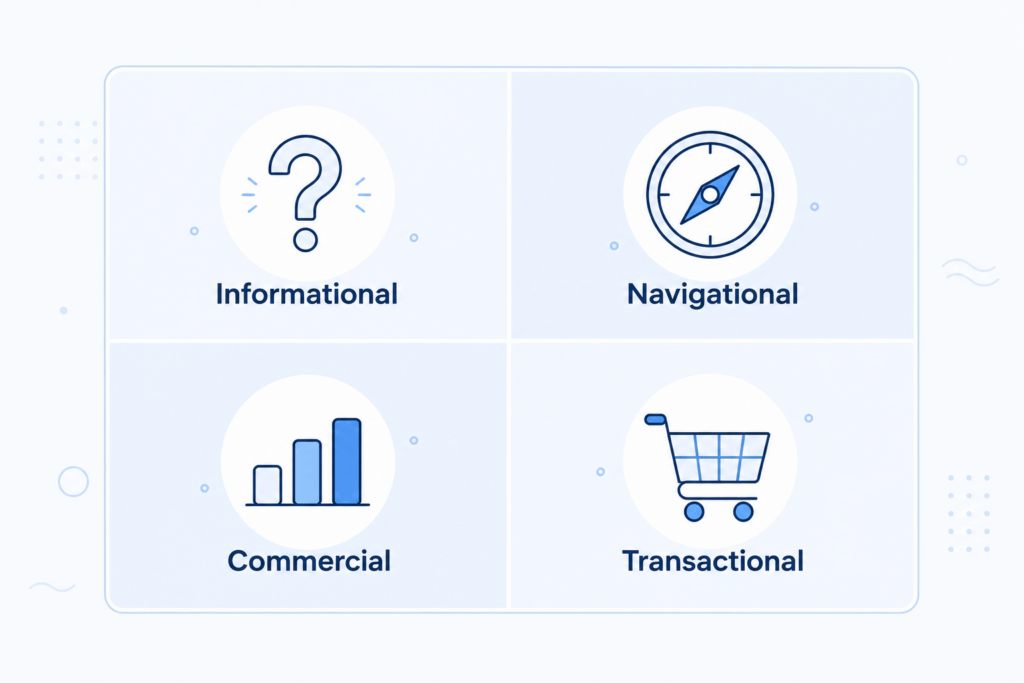
Search intent typically falls into four categories:
| Intent Type | What the User Wants | Example Query |
|---|---|---|
| Informational | An answer or explanation | “how to tie a tie” |
| Navigational | A specific site or page | “Spotify login” |
| Commercial | To compare before deciding | “best marketing automation tools” |
| Transactional | To take action now | “buy iPhone 13” |
Two people can type the same words and want different things, and two very different queries can share the same underlying goal. Intent is about the “why” behind the search, not the phrasing.
Why Does a Mismatch Hurt Rankings So Much?
Search engines increasingly rank pages based on how well they satisfy the searcher, not on how well they match a string of words. When content misses the intent, the signals are visible almost immediately: visitors land, don’t find what they expected, and leave. Google has said bounce rate itself isn’t a confirmed direct ranking factor, but that pattern of quick exits tends to correlate with weaker rankings over time, likely through indirect signals like lower return visits, fewer shares, and fewer links, even for content that’s well written and well optimized on paper.
The gap between matched and mismatched content can be substantial. The marketing agency The Digital Ring, for instance, states that pages which miss the intent behind a query can see bounce rates above 70%, while intent-aligned content keeps visitors engaged three to four times longer, though that specific figure comes from their own client work rather than a published study, so treat it as directional rather than a hard benchmark.
Research from Rankmax highlights the clearest warning signs of a mismatch:
- High bounce rate. Users land and immediately leave because the content didn’t deliver what the query promised.
- Low average time on page. Visitors scan and find the piece too shallow for an informational query, or can’t find the action they wanted for a transactional one.
- Poor click-through rate from the search results page. The title and meta description don’t clearly reflect the intent, so people don’t click at all.
- A ranking plateau. The page sits on page two or three and won’t move, often because the content type or format doesn’t match what’s already winning page one.
How Do You Diagnose a Search Intent Mismatch?
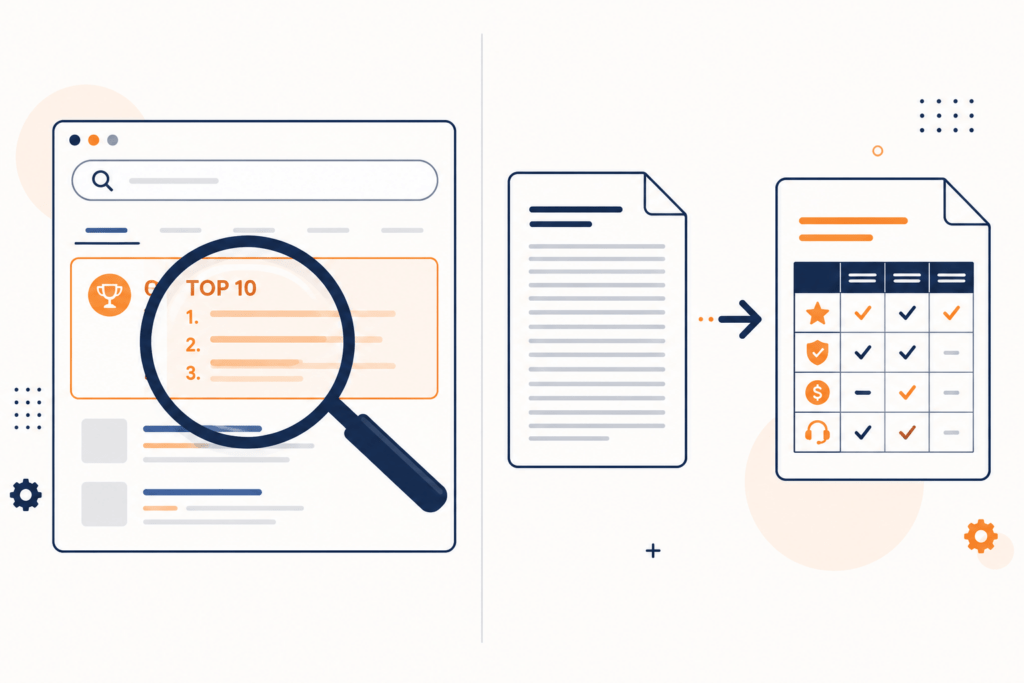
Start with the search results page itself, not your own assumptions. Open an incognito window, search your target keyword, and look at what’s already ranking in the top ten. That’s the clearest signal available of what a search engine, and by extension real users, consider a good answer to that query.
Rankmax describes this as the “3 Cs framework”, and it’s a useful shorthand. Pay attention to three things:
- Content type. Are the top results blog posts, product pages, tools, or videos?
- Content format. Are they how-to guides, listicles, comparison tables, or long-form explainers?
- Content angle. What’s the specific hook or value proposition on the top-ranking pages? Do titles lean on freshness (“updated for 2026”), a specific audience (“for beginners,” “for enterprise teams”), or a particular stance that sets them apart from generic coverage of the same topic?
If every top result for your keyword is a comparison table and yours is a single-product sales page, that’s your mismatch. If the query is clearly informational and your page reads like an ad, that’s your mismatch too.
Two Quick Examples
A landscaping company builds a page around “patio installation,” assuming it’s a ready-to-hire, transactional query. The page ranks, but bounce rate stays high and conversions stay flat. A look at the actual top ten results shows the query is still commercial, searchers are comparing materials, styles, and price ranges before they’re ready to talk to anyone. The fix isn’t a better sales pitch, it’s a comparison-style page that helps someone decide before it asks them to buy.
A SaaS company writes a genuinely comprehensive 2,000-word guide targeting “best CRM.” It’s well researched and well written, and it still underperforms a much thinner competitor. The top results turn out to be short, scannable comparison posts with a table near the top, not long-form explainers. The content wasn’t wrong, it was just built for the wrong depth and angle.
Both cases have the same lesson: the keyword was right, the effort was real, and the content still lost because it answered a different question than the one the SERP shows people are actually asking.
How Do You Fix It?
Once you’ve identified the gap between what you built and what the query actually calls for, the fix usually comes down to three moves.
Match the format, not just the topic. If informational queries in your niche are being won by step-by-step guides, restructure your piece as one, with clear headings and a logical sequence, rather than a single wall of text covering the same ground.
Match the depth. Informational content generally needs to be comprehensive and genuinely educational. Commercial content needs to help someone compare and decide. Transactional content needs to get out of the way and let someone act. Padding a transactional page with backstory, or leaving an informational page too thin, both read as a mismatch to both users and search engines.
Answer first, explain after. Open each section with the direct answer to the question implied by that heading, then layer in supporting detail underneath. This matters for human readers, who decide in seconds whether to keep reading, and increasingly for AI-generated answers, which tend to extract the first sentence of a section as the candidate answer.
Does This Change for AI Search and AI Overviews?
The mechanism is the same, but the stakes are higher. AI Overviews and generative search tools identify the intent behind a query before selecting which sources to summarize or cite, so a page that’s technically ranked but poorly matched to intent is less likely to be pulled into the answer at all. Content that clearly states its answer in the first sentence of a section, and that matches the depth and format the query calls for, has a much better shot at being the source an AI system actually quotes from.
In practice, that means the fix for search intent mismatch and the fix for AI visibility are largely the same fix: build content that answers the real question, in the format the searcher expects, as directly as possible.
How Do You Know the Fix Worked?
Track the same signals that revealed the problem in the first place:
- Average time on page should increase as visitors find what they came for.
- Bounce rate should drop as fewer people leave immediately.
- Rankings tend to improve gradually over the following weeks, not overnight.
- Click-through rate from the search results page should rise if the title and meta description were part of the mismatch.
Search intent isn’t a one-time fix. User expectations shift and search results change, so a quarterly check on priority keywords is worth building into any ongoing content process.
Tools That Help You Diagnose Search Intent
Manual SERP analysis is the most reliable method, but a few SEO tools can speed up the process and add data behind the judgment call:
- Ahrefs, Semrush, or SE Ranking all offer built-in intent classification for keywords, which is a fast way to sanity-check a hunch before committing to a rebuild.
- Google Search Console shows which actual queries are sending traffic to a page, which often reveals a mismatch that keyword research alone wouldn’t catch: a page ranking for a query it was never intended to answer. Search Engine Land’s guide on diagnosing bounce rate walks through this process in more depth, and is worth reading before assuming bounce rate alone tells the whole story, since Google has said bounce rate itself isn’t a direct ranking factor.
- Rank tracking tools help confirm whether a fix worked, by showing whether a page’s position moves after the content is rebuilt to match intent, rather than relying on a gut sense that it “reads better now.”
None of these tools replace the incognito SERP check. They just make it faster to confirm what a careful look at the search results page would already tell you.
Common Mistakes When Fixing a Search Intent Mismatch
A few habits quietly undo the fix even when the diagnosis was correct:
- Fixing the words instead of the format. Swapping in different phrasing while keeping the same page structure rarely works. If the SERP wants a comparison table and the page is still a single narrative block, no amount of rewording closes that gap.
- Guessing instead of checking the SERP. It’s tempting to assume intent based on the keyword alone. “Best running shoes” looks commercial on its face, but the actual top results might be closer to review round-ups than product pages. Always verify against what’s currently ranking.
- Changing everything at once. Rebuilding format, depth, and angle simultaneously makes it hard to know which change actually moved the needle. Where possible, make the format change first, and see how that alone shifts engagement, before over-correcting on depth too.
- Expecting overnight results. Rankings usually shift over several weeks as a search engine reassesses the page against updated signals, not immediately after publishing.
- Ignoring commercial and navigational intent nuance. Not every “best X” query wants a definitive pick. Many want a comparison to work through themselves. Treating every commercial query like a transactional one, with a hard sell, is its own kind of mismatch.
The Bottom Line
Search intent mismatch is one of the few SEO problems that’s genuinely fixable without a full rewrite from scratch. Most of the time, the topic and the keyword targeting were already right. What was missing was the format and depth the searcher actually expected. Check what’s winning the search results page, rebuild to match it, and the rankings tend to follow. The real-world examples above follow the same pattern every time: the keyword wasn’t the problem, the shape of the content was.
FAQ
What is search intent mismatch? It’s when a page’s format, depth, or angle doesn’t match what a searcher actually wants, even though the keyword targeting is accurate. A well-written page can still fail to rank if it’s the wrong type of content for the query.
How do I find out what search intent a keyword has? Search the keyword yourself and look at the top ten results. The content type, format, and depth that’s already ranking tells you what the search engine, and real users, expect for that query.
Can one page target more than one search intent? Rarely, and it’s risky. A page generally performs best when it satisfies one primary intent clearly, rather than trying to serve informational and transactional searchers on the same page.
Does fixing search intent mismatch help with AI search visibility too? Yes. AI Overviews and other generative search tools select sources based on how well they satisfy the intent behind a query, so content built to match intent clearly is also more likely to be surfaced or cited in an AI-generated answer.
How long does it take to see results after fixing a mismatch? Engagement metrics like time on page and bounce rate often shift within days to weeks. Ranking improvements tend to follow more gradually, typically over several weeks as the search engine reassesses the page against the updated signals.
What tools help diagnose a search intent mismatch? Ahrefs, Semrush, and SE Ranking offer built-in intent classification for keywords. Google Search Console shows which real queries are driving traffic to a page, which can reveal a mismatch that keyword research alone wouldn’t catch.
What’s the most common mistake people make when trying to fix intent mismatch? Rewording the content without changing its format. If the top-ranking results are comparison tables or short guides and the page stays a long narrative block, different phrasing alone rarely closes the gap.